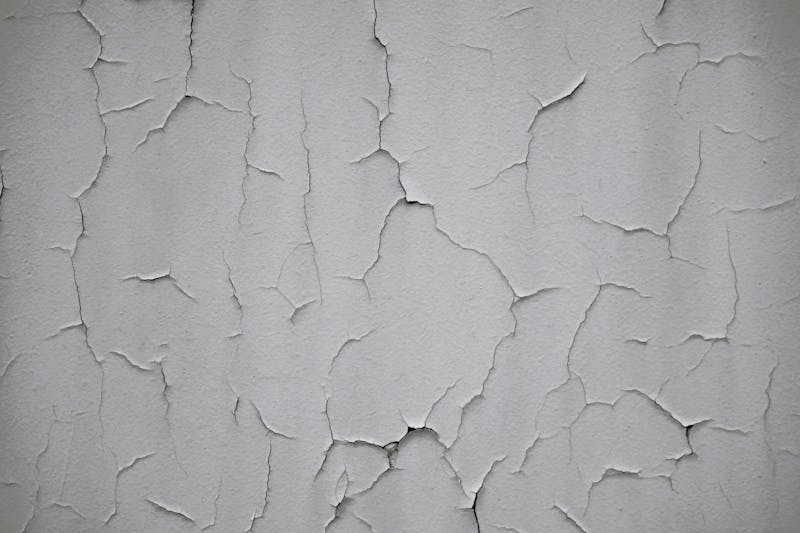
The soil beneath most El Paso properties is not sitting still. It expands when it absorbs water, contracts when it dries out, and shifts with every change in moisture content. If you own property here, that soil is an active participant in how your foundation, driveway, and flatwork perform over time.
What Expansive Clay Soil Is
Expansive clay refers to clay minerals that absorb water into their molecular structure and swell, then shrink when they dry. The most aggressive of these minerals is montmorillonite, a member of the smectite group.
Montmorillonite has a layered molecular structure that allows water to insert itself between the layers, generating substantial force. A montmorillonite-rich soil can exert 5,000 to 15,000 pounds of pressure per square foot as it swells. That is more than enough to lift and crack a residential foundation. When it dries, it contracts, developing deep vertical cracks and significant volume reduction. The substrate is never truly stable.
Where It Is Worst in El Paso
El Paso County sits at the intersection of multiple geological zones, which is why soil conditions vary considerably across the metro area.
The Upper Valley and Canutillo area sits on Rio Grande floodplain deposits rich in fine-grained alluvial clay. Seasonal river level changes create the moisture fluctuations that drive expansion cycles.
Central El Paso, Kern Place, and Sunset Heights are built on older alluvial deposits with significant clay content. The aging housing stock means foundations were designed to less demanding standards than current codes require.
The Northeast (Tierra Este, Pebble Hills) sits on Hueco Bolson basin fill where pockets of expansive clay vary dramatically across a single subdivision. Two houses on the same block can have very different soil profiles.
The East Side and Montana Vista corridor has some of the county’s most challenging clay conditions, with high montmorillonite concentrations amplified by large-lot drainage patterns.
The Franklin Mountains foothills and West Side generally have shallower soils over rock with more caliche and fewer expansive soil problems.
How Expansive Clay Damages Concrete
The damage mechanism is cyclical and cumulative. No single wet or dry event breaks a foundation. Repeated cycles of expansion and contraction fatigue the concrete and gradually move the structure beyond its tolerance.
Foundation Damage
When clay beneath a slab-on-grade foundation swells unevenly, it creates high points in some areas while other sections settle into voids left by dried, shrunken soil. This differential movement cracks the slab, distorts door and window frames, and stresses plumbing lines. Over many cycles, what starts as a hairline crack becomes a structural concern requiring professional foundation repair.
Driveway and Garage Slab Damage
Driveways are particularly vulnerable because they lack the weight of a house bearing down on them. An unloaded slab has less resistance to upward clay pressure, so heaving and cracking happen faster. Raised edges create trip hazards, pooling water accelerates deterioration, and the problem feeds itself. Professional driveway repair addresses both the surface damage and the underlying soil interaction.
Patio and Sidewalk Damage
Flatwork around the home sits in the most moisture-variable soil zone, where irrigation overspray, roof runoff, and sun exposure create sharp moisture gradients over short distances. Concrete leveling can restore flatwork to proper grade once soil conditions are managed, but without moisture control, the movement will recur.
The Moisture Gradient Problem
Expansive clay causes the most damage not where soil is uniformly wet or dry, but where moisture changes sharply over a short distance. The south and west sides of a home receive the most sun, drying the soil faster than the north and east sides. If the homeowner irrigates one side but not the other, the gradient becomes extreme. One side sits on swollen clay, the other on contracted clay several inches lower, and the foundation bends across the difference. That gradient is what causes asymmetric settlement. The same principle applies around leaking hose bibs, at downspout discharge points, and alongside driveways that channel runoff unevenly.
Mitigation Strategies
You cannot change the soil beneath your home, but you can manage the moisture conditions that activate it.
Maintain Consistent Soil Moisture
Soaker hoses placed 12 to 18 inches from the foundation, running on a timer during dry months, prevent the extreme shrinkage that causes settlement. The goal is consistency, not saturation. Overwatering one side while neglecting the other creates the very gradient you are trying to avoid.
Control Drainage
Soil grade should slope away from the foundation at a minimum of 6 inches of fall over 10 feet. Gutters should discharge at least 4 feet from the foundation. French drains may be necessary where grading alone cannot redirect flow.
Manage Landscaping
Large trees within 15 feet of a foundation draw hundreds of gallons of water daily during El Paso summers, creating a localized dry zone. Root barriers and supplemental moisture on the foundation side are worth considering. Drip irrigation is preferable to spray heads near the foundation because it applies water more gradually and with less overspray.
Monitor and Act Early
Small cracks and minor unevenness are the early warning system. Addressing them promptly through concrete leveling or targeted repair prevents the small problem from compounding. A foundation that has moved a quarter inch is far less expensive to stabilize than one that has moved two inches.
The Regional Picture
The American Society of Civil Engineers estimates that expansive soils cause more property damage in the United States each year than floods, tornadoes, hurricanes, and earthquakes combined. What makes El Paso distinct is the combination of highly expansive montmorillonite clay with an extreme arid climate. Cities in East Texas get enough consistent rainfall to moderate the dry end of the cycle. El Paso does not. The Franklin Mountains also create localized weather patterns where a thunderstorm soaks the East Side while the West Side stays dry, adding yet another variable to the moisture picture.
El Paso Concrete Repair Experts works with homeowners across the region to address the concrete and foundation damage that expansive clay causes and to stabilize structures against future movement.
Frequently Asked Questions
How do I know if my property has expansive clay soil?
A geotechnical soil test gives the definitive answer, but several indicators help without testing. Deep vertical cracks in exposed soil during dry months, soil pulling away from your foundation wall in summer, and widespread driveway cracking in your neighborhood all point to expansive clay. The USDA Web Soil Survey provides free soil mapping data for El Paso County that identifies shrink-swell potential by location.
Does watering my foundation really help?
A soaker hose on a timer, running 15 to 30 minutes daily during May through September, maintains relatively stable soil moisture and is one of the most effective preventive measures available. The goal is preventing extreme drying, not creating swamp conditions. Overwatering is counterproductive because it causes excessive swelling on the watered side, which is just a different version of the same problem.
Can I replace the clay soil around my foundation with non-expansive fill?
Removing clay and replacing it with gravel or sandy fill is sometimes recommended but must be done carefully, with a moisture barrier separating fill from native clay. This reduces direct pressure against foundation walls but does not address clay beneath the slab. It works best as a complement to drainage improvements, not a standalone solution.
Will a new home on expansive clay have foundation problems?
New construction in El Paso is subject to more rigorous geotechnical requirements than earlier decades. Post-tension slabs, deeper footings, and engineered fill mitigate risk. However, no design completely eliminates the potential for soil-related movement. Homeowners still need to manage drainage and moisture to get the performance the engineering was designed to deliver.