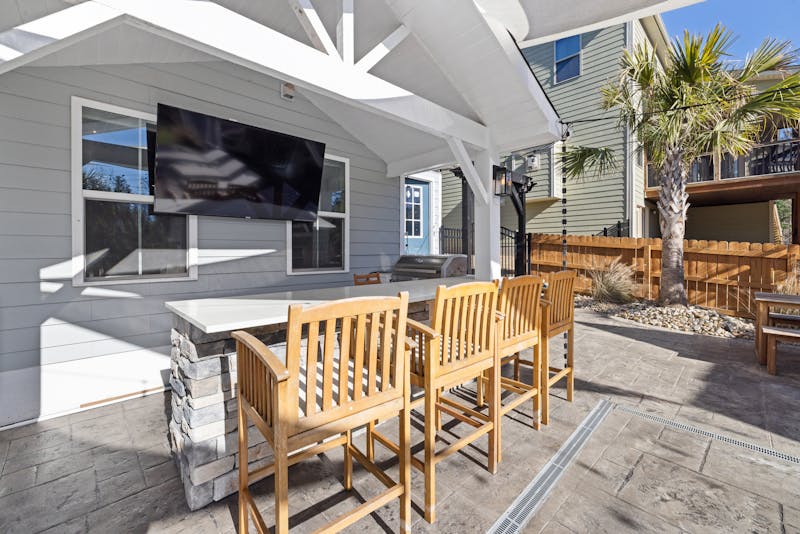
Patios Here Do Not Get a Break
Concrete patios in El Paso are exposed to UV radiation, surface temperatures above 140 degrees, monsoon downpours, and expansive soil movement twelve months a year. There is no off-season. A patio poured five years ago in this climate has taken more cumulative punishment than a ten-year-old slab in a more temperate region.
Cracks, settling, surface deterioration, and discoloration are all common. Most of this damage is repairable without tearing out the entire slab.
Types of Patio Damage
Cracking
Thermal cycling drives most patio cracks here. Concrete expands during the day and contracts overnight, and over years that movement fatigues the material. Cracks start at corners, edges, or control joints, then spread once water gets in and reaches the subgrade. This progression from surface to subgrade to wider damage is how most patio cracks develop, and it moves faster than people expect.
Settling
When soil under a patio section compresses or contracts, that section drops. This creates uneven surfaces, water draining toward the house instead of away, and visible lips between panels. Settling is common on patios poured over fill dirt that was not adequately compacted.
Surface Wear
UV exposure degrades the surface layer over time. Patios without sealer can develop a chalky, pitted surface within 3 to 5 years in El Paso. Spalling (where the top layer flakes off in patches) follows. The surface becomes rough, uncomfortable underfoot, and collects dirt.
Discoloration
Weathering, mineral deposits, and staining from planters, grills, and furniture create uneven color. Cosmetic only, but heavy discoloration makes a functional patio look like it needs replacing when it does not.
Repair and Restoration Options
Crack Repair
Stable cracks respond well to flexible sealants that accommodate thermal movement. For cracks indicating subgrade movement, concrete repair may involve injection plus leveling to address both the visible damage and the cause beneath it.
Leveling
Settled sections can often be raised through mudjacking or foam injection rather than replaced. This restores proper drainage slope and eliminates trip hazards in a few hours at far less cost than tearout.
Resurfacing
Concrete resurfacing applies a polymer-modified overlay that restores appearance and durability. It can add texture, color, and pattern, effectively giving you a new-looking patio without new concrete underneath.
Stamped Concrete
Stamped concrete is one of the more popular patio upgrades in El Paso. A stamped overlay replicates natural stone, brick, flagstone, or wood plank patterns at 40 to 60 percent of the cost of the real materials. El Paso’s dry climate actually works in favor of stamped concrete, since low humidity means sealers cure well and the surface stays cleaner between maintenance cycles.
Full Replacement
Patios with extensive cracking, failed subgrade, or broken sections beyond leveling are candidates for replacement. A new pour corrects drainage, adds reinforcement, installs proper expansion joints, and starts fresh with a finish that suits the space.
Finishes That Hold Up Here
Not every finish performs equally under 300-plus days of sun:
- Broom finish: standard, slip-resistant, low maintenance, proven in desert conditions
- Stamped patterns: flagstone, slate, and ashlar are popular, requiring resealing every 2 to 3 years
- Stained concrete: acid or water-based stains, with UV-resistant formulations lasting longer here
- Exposed aggregate: natural stone texture, UV-resistant, good traction
- Textured overlay: spray-applied or troweled over existing concrete
All decorative finishes benefit from UV-resistant sealer. Resealing every 2 to 3 years extends the life and appearance meaningfully.
Patios as Living Space
Patios in El Paso get used nearly every month of the year. A damaged patio limits how much of the property actually gets used, which is something buyers notice if the home goes to market.
If your pool deck is also showing wear, addressing both surfaces in one project often makes sense on logistics and cost.
Get a free patio assessment and find out what it takes to get your outdoor space back in order.
Frequently Asked Questions
Can a cracked patio be repaired or does it need replacement?
Most cracked patios can be repaired. Isolated cracks get sealed with flexible fillers. Settled sections are leveled through mudjacking or foam injection. Extensive surface damage responds to resurfacing overlays. Full replacement is typically necessary only when the slab has broken into multiple pieces or the subgrade has failed.
What are the best patio finishes for El Paso?
Stamped concrete, exposed aggregate, and stained concrete with UV-resistant sealer all perform well. Broom-finished concrete remains the most reliable low-maintenance choice. The finish matters less than the sealer in this climate, so plan on resealing every 2 to 3 years regardless.
How much does patio repair cost in El Paso?
Crack sealing is the most affordable. Leveling costs less than replacement. Resurfacing falls mid-range and varies with finish. Full replacement is the highest cost but gives you a new surface. A free assessment provides an accurate estimate.
How long does patio resurfacing take?
Most residential patios can be resurfaced in one to two days. Foot traffic is typically safe after 24 hours, with full use within 48 to 72 hours.
Is stamped concrete a good option for El Paso patios?
Stamped concrete performs well here. The dry climate supports good sealer adhesion, and available patterns (flagstone, slate, brick, wood plank) deliver premium aesthetics at concrete pricing. Reseal every 2 to 3 years.