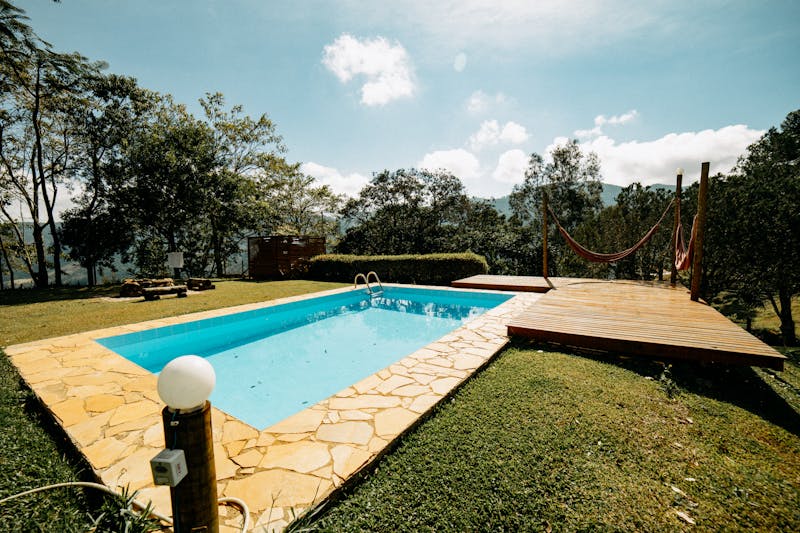
What El Paso Does to a Pool Deck
Pool decks here absorb conditions that most residential concrete never sees. Surface temperatures climb above 150 degrees on a July afternoon. Chlorinated water splashes onto the slab daily. Bare feet demand traction without abrasion. And because El Paso’s pool season runs roughly May through October, the concrete gets very little rest.
Pool deck repair in El Paso addresses cracking, surface deterioration, settling, and heat problems. Most damage can be repaired or resurfaced without tearing out the existing slab, which is worth knowing before assuming the worst.
Common Pool Deck Problems
Surface Deterioration
Chlorinated water, UV radiation, and foot traffic wear pool deck surfaces faster than other exterior concrete. Sealers degrade under El Paso’s sun within 2 to 3 years, and once the sealer fails, the concrete starts pitting, roughening, and chalking.
Heat Absorption
Standard gray concrete absorbs and retains solar heat. On a mid-summer afternoon, an uncoated deck is genuinely painful to walk on barefoot, which is a problem for a surface designed to be used without shoes. In El Paso, the hottest months are most of the months.
Cracking
Pool decks crack from thermal cycling and soil movement, but they face an additional factor: water around the pool perimeter saturates the soil locally. When that wet soil expands next to dry soil further out, the deck cracks along the boundary. That is why pool deck cracks tend to run parallel to the pool edge, typically 3 to 6 feet from the coping.
Settling
Backfill around pool installations settles because excavation disturbs the natural soil and the replacement fill compresses unevenly. Settled sections slope toward the pool, create standing water, and develop trip hazards at panel transitions.
Repair and Resurfacing Options
Cool Deck (Kool Deck)
An acrylic-based coating that reflects heat rather than absorbing it. Reduces surface temperature by roughly 25 to 35 percent compared to bare concrete, which is the difference between painful and tolerable on a 105-degree day. Also provides slip resistance and comes in a range of colors. Recoating is typically needed every 3 to 5 years. That is the tradeoff for a surface you can actually walk on in July.
Spray Texture Overlay
Spray-applied acrylic texture creates a uniform, slip-resistant surface over existing concrete. Provides heat reflection similar to cool deck and covers minor surface imperfections and staining in a single application.
Stamped Concrete Overlay
For decks where appearance matters as much as function, a stamped overlay provides the look of natural stone or flagstone. Pattern and color can be matched to pool tile, coping, and surrounding landscape.
Concrete Resurfacing
A polymer-modified overlay addresses surface wear, minor cracking, and discoloration. Thickness runs 1/4 to 3/4 inch depending on surface condition and finish.
Crack Repair and Leveling
Structural cracks and settled sections need to be addressed before any surface treatment goes on. Applying a cosmetic overlay over unrepaired structural damage hides the problem for about one season. Then it shows through.
Full Deck Replacement
Decks with extensive settling, multiple structural cracks, or severely deteriorated concrete may warrant full replacement. This allows for proper subgrade compaction, correct drainage slopes (minimum 1/4 inch per foot away from the pool), and a surface built for the conditions.
Choosing the Right Finish
Heat management. Lighter colors and reflective coatings keep temperatures bearable. Color selection alone can drop surface temperature by 20 degrees or more.
Slip resistance. The area around a pool is always wet. Textured overlays, broom finishes, and spray coatings provide traction without scraping skin.
Durability. UV-resistant sealers are not optional here. Budget for resealing every 2 to 3 years, because skipping that maintenance is how a $4,000 resurfacing job looks worn in 18 months.
Adjacent Work Worth Considering
Pool decks and patios often share the same backyard footprint. If the pool deck needs repair, evaluating the patio at the same time avoids mobilization costs for a second visit and produces a consistent look across the space.
Schedule a free pool deck assessment to find out what your deck needs and what it will cost.
Frequently Asked Questions
What is cool deck and is it right for El Paso?
An acrylic coating that reflects solar heat and reduces surface temperature by 25 to 35 percent. In El Paso, that makes pool decks usable during months when uncoated concrete is too hot for bare feet. Recoating is needed every 3 to 5 years.
How do you make a pool deck less slippery?
Textured overlays, spray coatings, broom finishes, and cool deck all provide slip resistance. For existing smooth decks, a textured overlay can go over the current surface.
How much does pool deck resurfacing cost?
Depends on surface area, finish type, and condition of the existing concrete. Spray texture is the most affordable. Cool deck and stamped overlays cost more but last longer. A free assessment provides specific pricing.
Can a damaged pool deck be resurfaced instead of replaced?
In most cases, yes, if the concrete is structurally sound. Cracks and settling should be repaired before the overlay. If the slab has extensive structural damage, replacement is more reliable.
What pool deck finish stays coolest in El Paso heat?
Light-colored cool deck coatings and heat-reflective spray textures. Avoiding dark colors and standard gray concrete makes the single biggest difference in surface temperature.