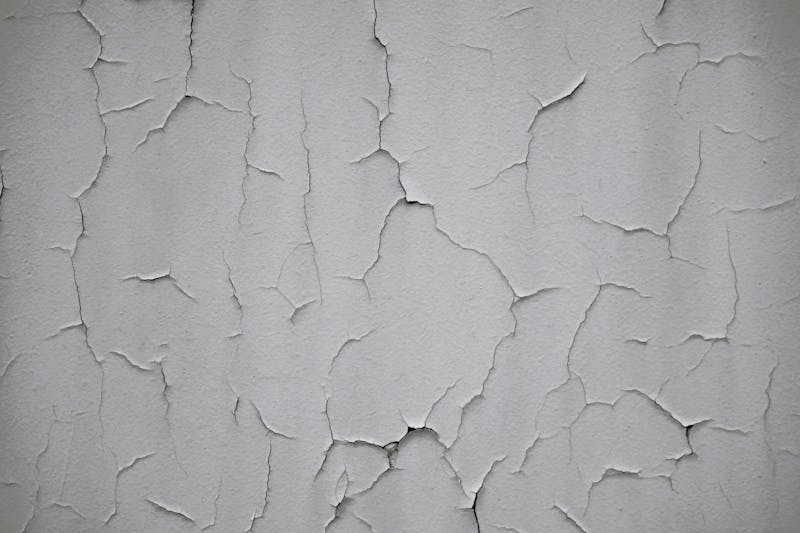
Foundations in El Paso fail in predictable ways. The desert climate and the clay beneath it produce a specific set of warning signs that show up in walls, doors, floors, and the slab itself. Recognizing those signs early determines whether you are looking at a moderate repair bill or a major structural project. This guide covers what to watch for in El Paso homes and when to call for foundation repair.
Visual Signs of Foundation Damage
The first evidence of foundation trouble usually appears inside the house, sometimes months before anything is visible from the outside.
Cracks in Walls and Ceilings
Not every crack means a foundation problem, but certain patterns are reliable indicators.
Diagonal cracks running at roughly 45 degrees from window and door corners indicate differential settlement, where one section of the foundation has moved while the section beside it has not. In El Paso homes, these tend to appear along south- and west-facing walls, where sun exposure dries the adjacent soil fastest.
Horizontal cracks in block or brick walls suggest lateral pressure from expanding soil pushing against the foundation wall. This pattern is common in neighborhoods built on montmorillonite clay.
Stair-step cracks in exterior brick follow the mortar joints and indicate the wall is being pulled apart along its weakest plane. These should not be written off as cosmetic.
The cracks worth watching are those that grow over weeks or months, reappear after patching, or are wider than 1/8 inch.
Doors and Windows That Stick
When a foundation shifts, it distorts the frames around doors and windows. Interior doors that drag on the floor, refuse to latch, or swing open on their own are responding to a frame that is no longer square. In El Paso, this symptom often shows up on a seasonal cycle. Doors that stick during dry months (May through September) and loosen after monsoon rains are reacting to the soil shrinking and swelling beneath the slab. The pattern itself is informative.
Uneven or Sloping Floors
A marble on the floor is a crude but effective test. If it rolls consistently in one direction across different rooms, the slab may have developed a tilt from differential settlement. The general threshold for concern is about 1 inch of slope over 15 to 20 feet. Beyond that, the structural load distribution is being affected and professional concrete repair should be evaluated.
Gaps Between Walls and Ceiling or Floor
Separation at crown molding, baseboards pulling away from the wall, or gaps where exterior walls meet the ceiling all indicate the structure is being pulled or pushed out of alignment. In slab-on-grade homes, which make up the majority of El Paso’s housing stock, these gaps suggest either the perimeter is settling while the center holds, or the reverse.
How to Measure and Monitor
If you spot warning signs but are not sure whether they are active or old, simple monitoring gives you useful data before you spend any money.
Crack monitors: Mark both ends of a crack with pencil lines and date them. Measure the width monthly. If the crack is growing, the foundation is actively moving.
Door clearance checks: Close an interior door and note the gap between the door edge and the frame on all sides. Photograph it with a ruler in the frame. If the gap changes over a few weeks, the structure is shifting.
Floor elevation mapping: Using a builder’s level or a laser level, record floor elevation readings across the slab. Re-measure in 60 to 90 days. Changes exceeding 1/4 inch indicate active movement.
Document everything with dated photos. If you eventually need foundation repair, this history helps the engineer understand the timeline and rate of movement, which affects the repair design.
El Paso-Specific Causes
Expansive Clay Soil
Large portions of El Paso sit on montmorillonite clay, one of the most expansive soil types on the continent. Summer drying pulls moisture from soil to depths of 6 to 8 feet, causing the clay to contract and foundations to settle. Monsoon rains re-saturate the clay and heave the foundation upward. The Upper Valley, Central El Paso, and parts of the Northeast are particularly affected. The damage is cumulative across seasons, not the result of any single event.
Drought and Irrigation Imbalance
Extended dry periods cause soil to shrink away from foundations. Homes with heavy landscape irrigation on one side and dry soil on the other develop a differential moisture condition that is one of the primary causes of asymmetric settlement. The house does not settle evenly. It tilts.
Plumbing Leaks Beneath the Slab
Under-slab plumbing leaks are a major contributor to foundation problems here. Cast iron drain lines in pre-1980s homes corrode from the inside out. A slow leak saturates the soil unevenly, creating a soft zone beneath the slab. If your water bill has increased without explanation, a plumbing leak may be doing damage you cannot see yet.
When to Call a Professional vs. Monitor
Monitor on your own if you see hairline drywall cracks with no other symptoms, seasonal door sticking that resolves with weather changes, or a single small stable crack.
Schedule a professional evaluation if cracks are wider than 1/4 inch or growing, multiple symptoms appear together, there is visible separation between structural components, or you are buying or selling the home.
Act without delay if you see sudden new cracks, significant floor slope, doors that no longer close at all, or exterior brick separation. These suggest active movement that benefits from prompt attention.
El Paso Concrete Repair Experts can assess your foundation and tell you whether you are looking at normal aging or a structural concern. Request a free estimate and get a clear answer rather than wondering through another season.
Frequently Asked Questions
Are foundation cracks normal in El Paso homes?
Minor hairline cracks are common in virtually all concrete slab foundations and do not necessarily indicate structural failure. El Paso’s temperature swings and soil behavior mean that some surface cracking is expected. The cracks that warrant attention are those wider than 1/8 inch, those that grow over time, diagonal cracks running from corners of doors or windows, and any crack accompanied by other symptoms like sticking doors or sloping floors.
How quickly do foundation problems get worse?
The rate depends on the cause. Movement driven by a plumbing leak can accelerate rapidly once the saturated zone grows large enough. Settlement from gradual soil compaction may progress slowly over years. Damage from clay expansion and contraction is cumulative and seasonal, worsening each cycle. In all cases, earlier intervention means a less extensive and less expensive repair.
Can landscaping cause foundation problems in El Paso?
Large trees planted close to the foundation draw enormous amounts of moisture from the soil, causing localized shrinkage and settlement. In El Paso’s dry climate, this effect is amplified. Heavy irrigation directly against the foundation saturates soil on one side while the opposite stays dry, creating differential moisture conditions. A reasonable guideline is to keep trees at least as far from the foundation as their mature canopy width, and to maintain consistent moisture on all sides.
Should I get a foundation inspection before buying a home in El Paso?
A pre-purchase foundation inspection is one of the more useful things a buyer can do here. Given the prevalence of expansive clay and the age of much of the housing stock, foundation issues are more common in El Paso than in many markets. An independent structural engineer’s inspection costs a few hundred dollars and can reveal problems that would cost thousands to address. It also gives you negotiating leverage on the purchase price.